Turbo Vision for Rust
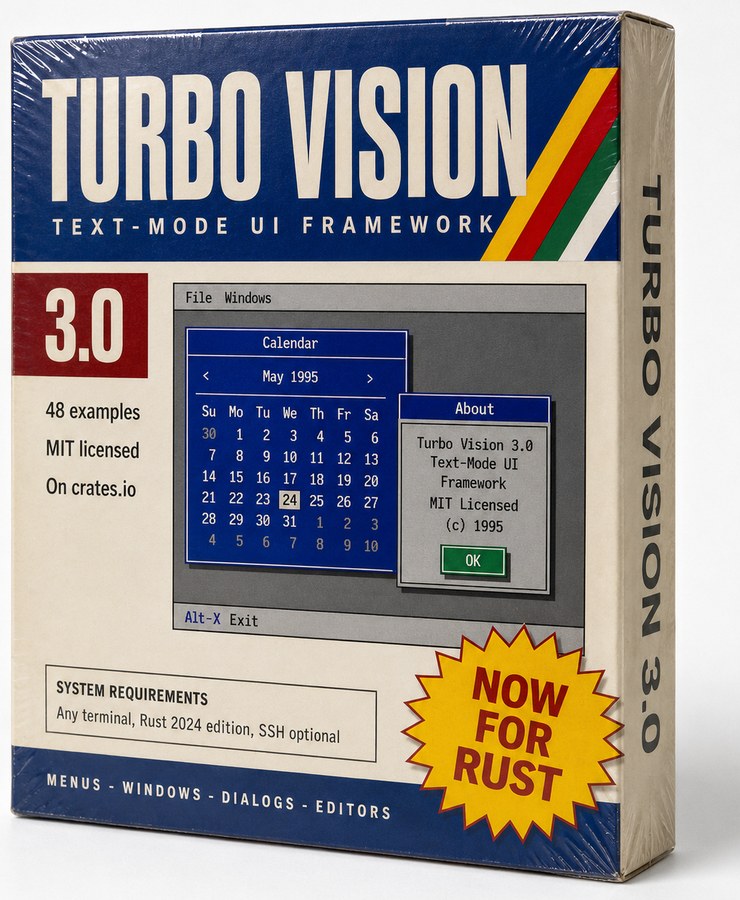
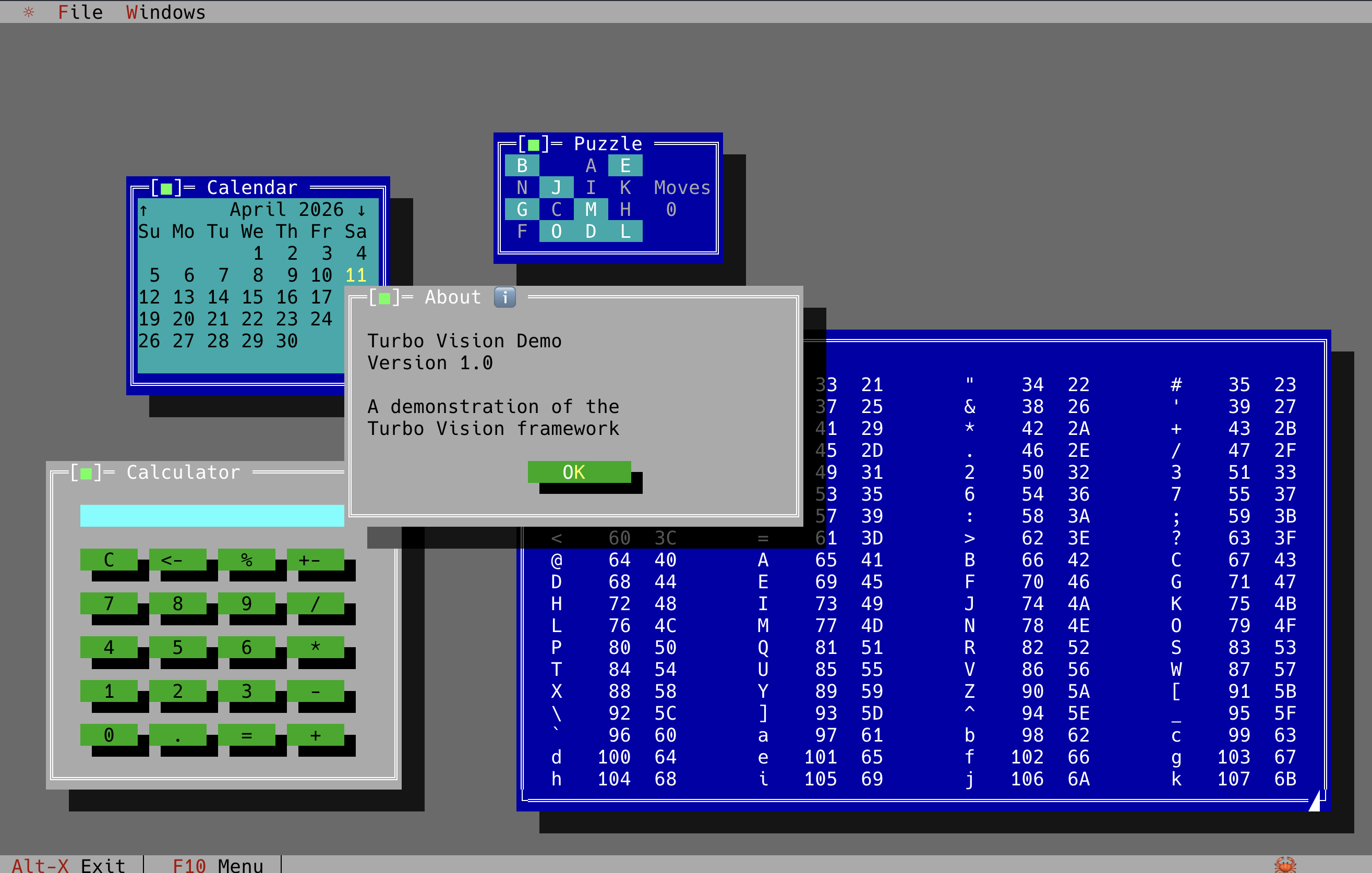
The Borland text-mode UI framework, rebuilt in Rust. Menus, windows, dialogs, validators, editors and palettes, drawn in a terminal, on a desktop that still looks like 1991.
What it gives you
The crate is a full port of Borland's class library, not a lookalike. The class tree
TView → TGroup → TWindow → TDialog survives as a stack of Rust traits, the
event model is the same three-phase dispatch, the palettes are the original Borland colour tables,
and the commands still start at cmQuit. If you wrote Turbo Vision in Pascal or C++ you already
know most of this library.
-
:material-application-outline: An application shell
A menu bar, a status line, a desktop with draggable, resizable, shadowed windows, and a modal loop that behaves like
TProgram::run. -
:material-form-textbox: Real controls
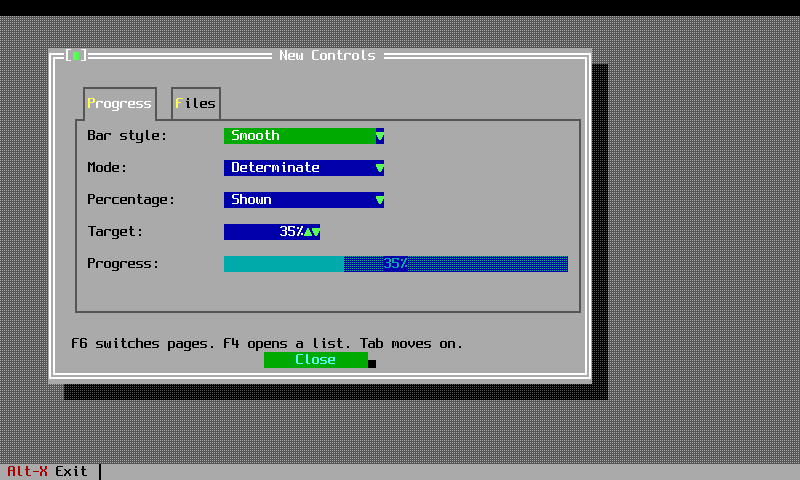
Input lines, buttons, check boxes, radio buttons, list boxes, combo boxes, scroll bars, trees, split panes, progress bars, tooltips and history dropdowns.
-
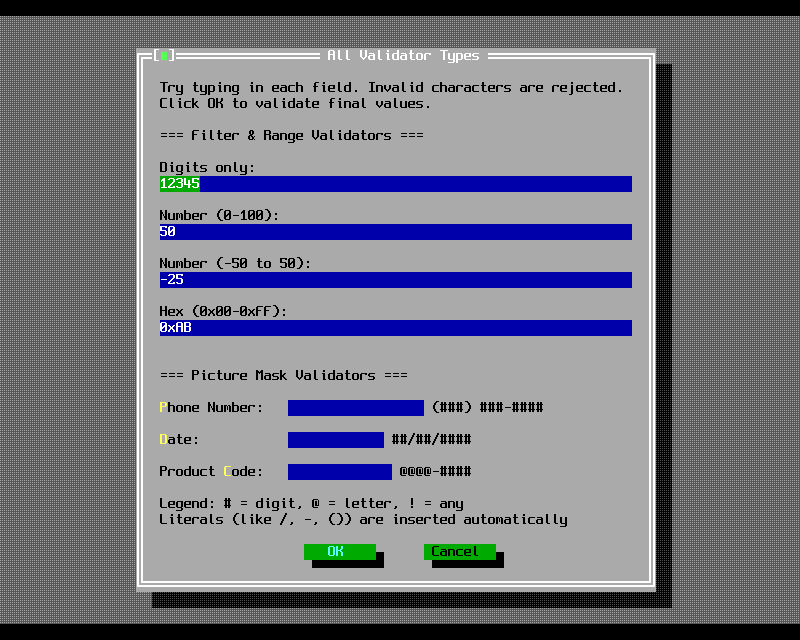
:material-check-decagram: Validators
Filter, range and picture validators, wired into input lines the way Borland wired them, so a dialog refuses to close on bad data.
-
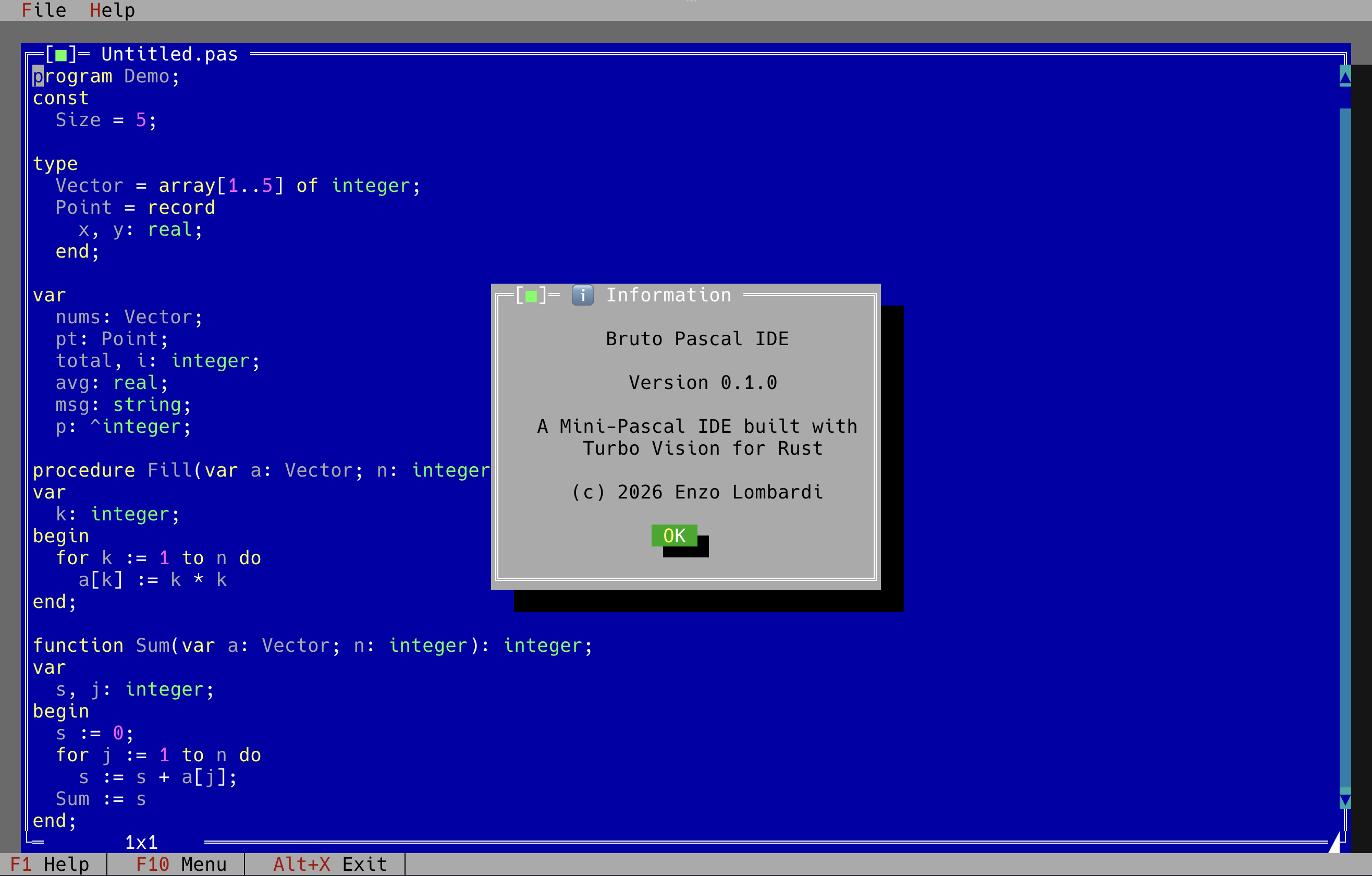
:material-file-document-edit: An editor
A text editor view with selection, clipboard, undo and syntax highlighting, plus the file-open and change-directory dialogs that go with it.
-
:material-palette: The Borland palettes
The palette chain is pushed down the view tree at draw time, so a control picks up its colour from the window that owns it, exactly as the original did.
-
:material-console-network: A terminal layer
A
Backendtrait with a crossterm implementation, an optional SSH server behind a feature flag, and a mock terminal your tests can draw into and read cells back from.
Thirty seconds of code
use turbo_vision::core::status_data::StatusItemBuilder;
use turbo_vision::prelude::*;
use turbo_vision::views::status_line::StatusLine;

fn main() -> turbo_vision::core::error::Result<()> {
    let mut app = Application::new()?;

    let (w, h) = app.terminal.size();
    app.set_status_line(StatusLine::new(
        Rect::new(0, h as i16 - 1, w as i16, h as i16),
        vec![
            StatusItemBuilder::new()
                .text("~Alt-X~ Exit")
                .key("Alt+X")
                .command(CM_QUIT)
                .build(),
        ],
    ));

    app.run();
    Ok(())
}
Where to go next
| If you want to | Read |
|---|---|
| Build your first application | Getting started then Chapter 1 |
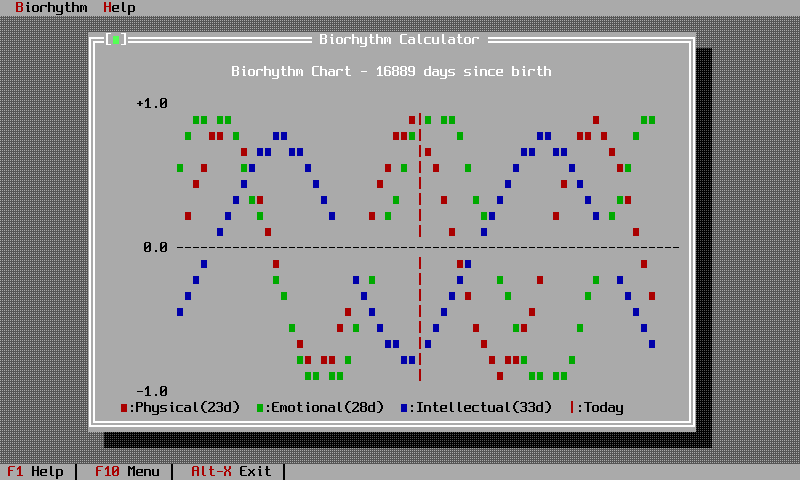
| Follow a complete worked project | The biorhythm calculator tutorial |
| Understand the trait layering | Views and groups, the class diagram and the design document |
| Port a C++ Turbo Vision program | The application model, side by side |
| See what changed in 3.0.0 | What's new |
| Move an existing project onto 3.0.0 | The upgrade guide |
It looks like this
Credits
Built by Enzo Lombardi, from Borland's original Turbo Vision 2.0 and the kloczek C++ port. MIT licensed.